

4 Days in Dublin: History and Memory
4 Days in Dublin: History and Memory
Day 1: Medieval Dublin and Urban Origins
Explore the foundations of Dublin through Viking settlements, medieval churches, Norman fortifications, and the surviving traces of the old city embedded within modern streets and archaeological landscapes.
Morning
Begin at Dublinia, where interactive exhibits and reconstructed streets explore Viking Dublin, medieval trade, warfare, religion, and everyday urban life.
Continue to Christ Church Cathedral, one of Dublin’s oldest and most important religious landmarks. Originally founded by Viking settlers and later expanded by the Normans, the cathedral is known for its Gothic architecture, medieval crypt, and long association with Dublin’s religious and civic history.
Requirements for respectful/modest attire apply at churches and other religious sites. Visitors should avoid disrupting religious observances and remain mindful of posted customs.
Late Morning/Afternoon
Proceed to Dublin Castle, which served for centuries as the administrative center of British rule in Ireland. Explore the ceremonial state apartments, courtyards, and surviving medieval elements while learning about the castle’s political role in Irish governance, colonial administration, and the transition to Irish independence.
Nearby, visit the Chester Beatty Library, whose collections include illuminated manuscripts, rare books, Islamic art, East Asian scrolls, and sacred texts from across the world.
Optional add-on: While leaving the Dublin Castle complex, make a brief stop at the Dubh Linn Garden, known for its Celtic knot landscaping and for its association with the “black pool” from which Dublin takes its name.
Optional add-on: Visit St Patrick's Cathedral, historically associated with Jonathan Swift, author of Gulliver's Travels. The cathedral combines Gothic architecture, literary history, and centuries of religious tradition.
Late Afternoon/Evening
Explore Wood Quay and the surrounding medieval quarter, including surviving sections of the Old Dublin City Wall and the area surrounding the gate at St Audoen’s Church, one of the last surviving medieval gates of Dublin.
This area sometimes called Viking Area since it was once the center of Viking settlement and trade along the River Liffey. It preserves traces of the city’s earliest urban foundations and archaeological discoveries.
Day 2: Revolution, Nationalism, and Political Memory
Examine Ireland’s struggle for independence and the competing memories of revolution, imprisonment, war, and national identity through some of Dublin’s most important political and commemorative landmarks.
Morning
Begin at the General Post Office on O’Connell Street, one of the central sites of the 1916 Easter Rising and an enduring symbol of Irish independence. Exhibits explore the rebellion, its leaders, and the political transformation that followed.
Pause briefly at the Garden of Remembrance, dedicated to those who died in the cause of Irish freedom.
Continue by transit or taxi to the Glasnevin Cemetery Museum, where guided tours explore the graves of political leaders, revolutionaries, writers, and public figures central to modern Irish history.
Afternoon
Take transit or a taxi to Kilmainham Gaol, one of Ireland’s most important historical sites and a powerful symbol of Irish nationalism and independence. Former political prisoners connected to uprisings and revolutionary movements were held here, including leaders of the 1916 Easter Rising. Guided tours examine prison life, rebellion, execution, and Ireland’s struggle for independence. Reservations are strongly recommended when booking windows open, as tours often sell out in advance.
Optional add-on: Visit the National Museum of Ireland, Collins Barracks, focusing on collections that examine Irish military history, political symbolism, and the material culture of both colonial and independent Ireland.
Continue to Irish National War Memorial Gardens, dedicated to Irish soldiers who died during the First World War. The gardens offer a quieter and more reflective perspective on Irish memory, particularly regarding the complicated legacy of Irish participation in British military service.
Evening
Spend the evening exploring The Liberties area, one of Dublin’s oldest working-class districts historically associated with brewing, markets, craftspeople, and traditional pub culture. Enjoy dinner and live music at a historic pub in the area.
Day 3: Poverty, Famine, and Emigration
Explore the social history of Dublin through tenement life, famine, emigration, and the changing fortunes of the city’s north inner neighborhoods and docklands.
Morning
Begin at 14 Henrietta Street, a restored Georgian townhouse transformed into a museum of Dublin tenement life. Guided tours trace the building’s evolution from aristocratic residence to overcrowded tenement housing.
Continue to St Michan’s Church, known for its medieval origins, atmospheric crypts, and long association with Dublin’s merchants, political figures, and urban communities. Requirements for respectful/modest attire apply at churches and other religious sites. Visitors should avoid disrupting religious observances and remain mindful of posted customs.
Afternoon
Proceed to EPIC The Irish Emigration Museum, whose interactive exhibits explore Irish migration, diaspora communities, global Irish influence, and personal stories of emigration through multimedia displays and immersive galleries.
Next, tour the Jeanie Johnston Tall Ship & Famine Museum, a reconstruction of a nineteenth-century emigrant vessel associated with the Great Famine period. Exhibits examine famine migration, transatlantic journeys, and the experiences of Irish emigrants seeking new lives abroad.
Optional add-on: Explore the Irish Famine & Emigration Exhibition Dublin - Irish Diaspora for additional historical context on famine-era migration, social conditions, and the global Irish diaspora.
Late Afternoon/Evening
Walk along the River Liffey toward The Custom House, a symbol of British administration, commerce, and later revolutionary conflict.
Continue to the nearby Famine Memorial, whose bronze sculptures commemorate the suffering, displacement, and mass emigration associated with the Great Famine.
Optional add-on: Attend a performance at The Abbey Theatre, Ireland’s national theatre where productions frequently engage themes of identity, politics, memory, and social change.
Day 4: Scholarship, Archaeology, and Literary Dublin
Examine Ireland’s intellectual, literary, and cultural traditions through historic libraries, ancient artifacts, Georgian streetscapes, and the institutions associated with generations of Irish writers and scholars.
Morning
Begin at Marsh’s Library, Ireland’s oldest public library, whose preserved eighteenth-century reading rooms and collections evoke the scholarly atmosphere of early modern Dublin.
Continue to Trinity College Dublin, one of Ireland’s most important intellectual and literary institutions. Explore the historic campus and take in The Book of Kells Experience, renowned for its intricate medieval calligraphy and artistic craftsmanship.
Afternoon
Proceed to the National Museum of Ireland – Archaeology, whose collections explore prehistoric Ireland, Celtic craftsmanship, Viking artifacts, and early medieval treasures. Highlights include Iron Age bog bodies, gold ornaments, and various religious objects.
Optional add-on: Examine the Yeats exhibit at the National Library of Ireland, which explores the life, manuscripts, poetry, and cultural influence of W. B. Yeats alongside Ireland’s broader literary revival and intellectual history.
Spend the remainder of the afternoon exploring the Georgian and literary atmosphere around Grafton Street and Merrion Square Park, known for elegant terraces, colorful doors, literary associations, and its statue of Oscar Wilde. Grafton Street, on the other hand, is known for buskers, shops, cafés, and lively city atmosphere.
Evening
Explore pubs associated with writers, journalists, intellectuals, Ulysses, and old Dublin literary culture. Some of Dublin’s most famous literary pubs are: Davy Byrnes, known for its role in Ulysses and James Joyce being a regular The Palace Bar, known for its association with The Irish Times, Patrick Kavanagh, Flann O'Brien, and Brendan Behan Mulligan's, long associated with journalists, writers, and literary Dublin
Or join the Official Literary Pub Crawl beginning at The Duke, where actors and guides perform excerpts from Irish literature while leading visitors between historic pubs.
Options for Bad Weather
In case of bad weather, visit The Little Museum of Dublin for guided exhibits examining twentieth-century Dublin life, social change, music, politics, literature, and everyday city culture through photographs, artifacts, and storytelling.
Optional Trip Extension
Visit Brú na Bóinne, the ancient archaeological landscape that includes Newgrange and Knowth, among Ireland’s most important prehistoric monuments. Dating back over 5,000 years, the site is deeply connected to Irish mythology, sacred ritual landscapes, solar alignments, and the origins of storytelling and spiritual tradition in Ireland. The monumental passage tombs and surrounding countryside provide one of the country’s most powerful experiences of mythic and ancient Ireland.
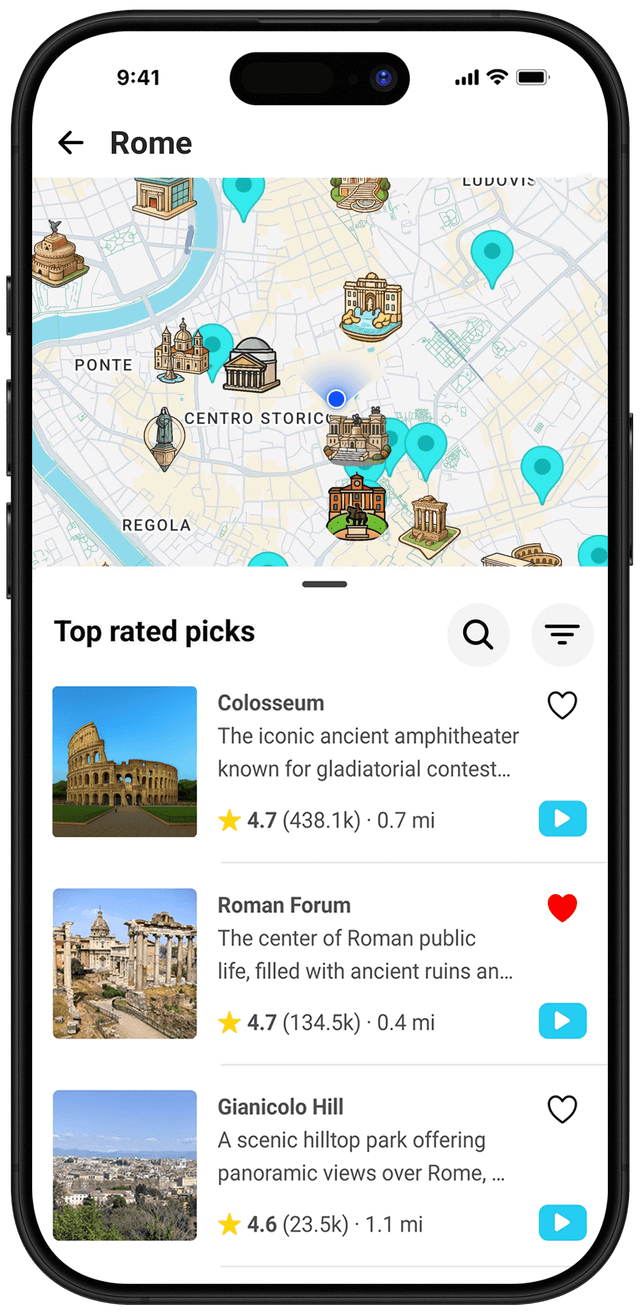
Make the most of your trip with the Travi App
Audio Guides
Professional narrated stories that you can listen to on your own schedule.
Snap & Learn
Point your camera at any monument to instantly identify it and hear its history.
Itineraries
Browse curated day-by-day plans, customize them to fit your style, or build your own from scratch and share with friends.