

2 Days in Dublin
2 Days in Dublin
Day 1: Historic Dublin and First Literary Impressions
Discover Dublin through its Georgian streets, literary institutions, early Irish history, riverside scenery, and traditional music culture while experiencing many of the city’s most iconic landmarks.
Morning
Begin the morning with a traditional Irish breakfast featuring items such as rashers, sausages, eggs, black pudding, grilled tomato, and soda bread at a local café or pub.
Visit Trinity College Dublin, Ireland’s oldest university and one of the city’s most important intellectual and literary landmarks. Take in The Book of Kells Experience, known for its intricate medieval calligraphy and illustrations.
Head toward Grafton Street, one of Dublin’s principal pedestrian streets known for buskers, shops, cafés, and lively city atmosphere. Pause at Bewley's Grafton Street Café for tea or coffee alongside traditional Irish scones beneath its stained-glass interiors and historic café setting.
Afternoon
Proceed to the National Museum of Ireland – Archaeology, whose collections explore prehistoric Ireland, Celtic craftsmanship, Viking artifacts, and early medieval treasures. Highlights include Iron Age bog bodies, gold ornaments, and illuminated religious objects that help contextualize Ireland’s mythology and ancient culture.
Walk through Merrion Square Park, one of Dublin’s grand Georgian squares known for colorful doors, elegant terraces, and statue of Oscar Wilde. Continue to St. Stephen's Green, a landscaped Victorian park surrounded by Georgian architecture and connected to many of Dublin’s literary and political figures.
Continue afterward to St Patrick's Cathedral, historically associated with Jonathan Swift, author of Gulliver's Travels. The cathedral combines Gothic architecture, literary history, and centuries of religious tradition. Requirements for respectful/modest attire apply at churches and other religious sites. Visitors should avoid disrupting religious observances and remain mindful of posted customs.
Optional add-on: Visit the EPIC The Irish Emigration Museum for interactive exhibits exploring Irish migration, diaspora communities, global Irish influence, and personal stories of emigration through multimedia displays and immersive galleries.
Evening
Stop by Dublin Castle, which served for centuries as the administrative center of British rule in Ireland, for an exterior photo op.
Take an evening walk along the River Liffey toward the illuminated Ha'penny Bridge, one of the city’s best-known pedestrian bridges and a classic symbol of central Dublin.
Later in the evening, attend a traditional Irish music and dancing performance such as Celtic Nights Dinner & Show or The Irish House Party to experience Irish folk music, storytelling traditions, and dance performances.
Optional add-on: Explore the lively streets and pubs of Temple Bar, considered by many to be Dublin’s best-known nightlife district.
Day 2: Revolution, Guinness, and the Liberties
Explore the political history, brewing heritage, and working-class traditions of Dublin through revolutionary landmarks, historic pub culture, and the atmospheric streets of the Liberties district.
Morning/Early Afternoon
Begin the day at the museum of the General Post Office on O’Connell Street, one of the central sites of the 1916 Easter Rising and an enduring symbol of Irish independence and national identity.
Then take transit or a taxi to Kilmainham Gaol, one of Ireland’s most important historical sites and a powerful symbol of Irish nationalism and independence. Former political prisoners connected to uprisings and revolutionary movements were held here, including leaders of the 1916 Easter Rising. Guided tours explore prison life, rebellion, execution, and Ireland’s struggle for independence. Reservations are strongly recommended when booking windows open, as tours often sell out in advance.
Optional add-on: Continue into Phoenix Park, one of Europe’s largest enclosed urban parks known for broad avenues, deer herds, gardens, and monuments.
Late Afternoon
Continue to the Guinness Storehouse in the historic Liberties district. Exhibits explore the brewing process, advertising history, industrial heritage, and global influence of Guinness. The upper Gravity Bar provides panoramic views across Dublin’s rooftops and surrounding hills.
Evening
Spend the evening exploring the Liberties area, one of Dublin’s oldest working-class districts historically associated with brewing, markets, craftspeople, and traditional pub culture. Enjoy dinner and live music at a historic pub in the area. Consider trying Irish stew (usually lamb, carrots, potatoes, onions), soda bread, boxty (Irish potato pancakes), or other traditional comfort dishes alongside Guinness or Irish whiskey.
Optional add-on: Join a Dublin ghost tour exploring topics and areas such as medieval lanes, cathedral districts, plague history, executions, folklore, and haunted legends associated with the city’s darker past.
Options for Bad Weather
In case of bad weather, visit the:
- EPIC The Irish Emigration Museum for interactive exhibits exploring Irish migration, diaspora communities, global Irish influence, and personal stories of emigration through multimedia displays and immersive galleries
- National Gallery of Ireland for collections of Irish and European paintings, sculpture, portraiture, and decorative arts featuring artists such as Caravaggio, Vermeer, Jack B. Yeats, and Monet
- The Little Museum of Dublin for guided exhibits examining twentieth-century Dublin life, social change, music, politics, literature, and everyday city culture through photographs, artifacts, and storytelling
- Irish Museum of Modern Art for contemporary art by Irish and international artists displayed in the Royal Hospital Kilmainham
- Irish Whiskey Museum for guided exhibits tracing the history of Irish whiskey production, trade, decline, and revival through interactive storytelling, historic displays, and optional tasting experiences
- Chester Beatty Library for illuminated manuscripts, rare books, East Asian scrolls, Islamic art, and sacred texts from across the world
- Museum of Literature Ireland for exhibits dedicated to Irish writers, poetry, manuscripts, storytelling traditions, and literary figures such as James Joyce, Samuel Beckett, and W. B. Yeats
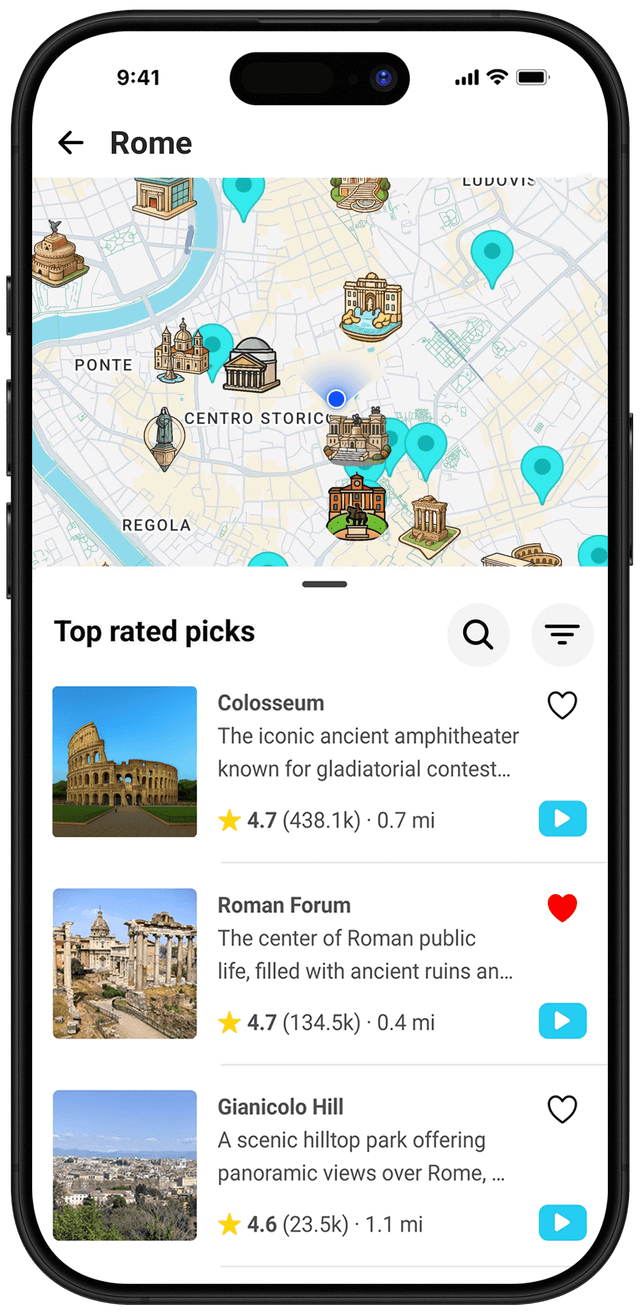
Make the most of your trip with the Travi App
Audio Guides
Professional narrated stories that you can listen to on your own schedule.
Snap & Learn
Point your camera at any monument to instantly identify it and hear its history.
Itineraries
Browse curated day-by-day plans, customize them to fit your style, or build your own from scratch and share with friends.