

4 Days in Berlin: History & Memory
4 Days in Berlin: History & Memory
Day 1
Focuses on the rise and consequences of Nazi Germany through sites of power, terror, and remembrance.
Morning
Begin your day at Brandenburg Gate, once a symbol of imperial power and later division, now reframed within unified Berlin. Move into the Memorial to the Murdered Jews of Europe, where the abstract field of stelae creates a deeply personal and disorienting encounter with loss. Continue to the nearby Reichstag Building, where the contrast between destruction and democratic rebuilding becomes evident.
Afternoon
In the afternoon, Walk south to Topography of Terror, located directly on the former headquarters of the Gestapo and SS, where the Nazi regime’s systems of persecution were administered. Continue toward Checkpoint Charlie, where the shift from WWII into Cold War division begins to take shape.
Evening
Remain in Mitte for a quieter evening. The density of the day requires space for reflection rather than additional programming.
Optional
Options / Add-Ons
- German Resistance Memorial Center
- Jewish Museum Berlin (architectural + experiential depth)
Day 2
Explores Berlin’s division through remaining wall segments, escape narratives, and border zones.
Morning
Begin your morning, at Berlin Wall Memorial, where the preserved “death strip” and documentation center provide the clearest understanding of how the wall functioned. This is one of the few places where the scale and brutality of the border system is still legible.
Afternoon
For the afternoon, move to East Side Gallery, where the longest remaining wall segment has been transformed into an open-air gallery. The murals reinterpret the wall as a space of expression, contrasting sharply with the controlled environment of Bernauer Strasse.
Return toward central Berlin, reconnecting with Checkpoint Charlie if not fully explored the previous day.
Evening
End the day in Kreuzberg, historically part of West Berlin, where the city’s counterculture and immigrant communities developed in the shadow of the Wall. The neighborhood provides lived context to the day’s historical framework.
Optional
Options / Add-Ons:
- DDR Museum (life in East Germany)
- Stasi Museum (surveillance state)
Day 3
Expands beyond central Berlin into decision-making sites and broader historical context.
Morning
In the morning, visit House of the Wannsee Conference, where senior Nazi officials coordinated the “Final Solution.” The lakeside setting contrasts sharply with the gravity of decisions made here.
Afternoon
Walk along Wannsee for a quieter transition before returning to Berlin. This balance prevents the day from becoming overly dense.
Evening
End with a quieter walk or dinner. The final evening should consolidate understanding rather than introduce new content.
Optional
- Located just outside Berlin
- One of the most impactful historical sites
- Best suited for those wanting deeper WWII context
Day 4
Expands beyond central Berlin into decision-making sites and broader historical context.
Morning
Visit German Historical Museum, providing a broader timeline beyond WWII.
Afternoon
In the afternoon, Walk through neighborhoods noting Stolpersteine (memorial stones embedded in sidewalks), which connect individual lives to the broader historical narrative.
Evening
End with a quieter walk or dinner. The final evening should consolidate understanding rather than introduce new content.
Section 4
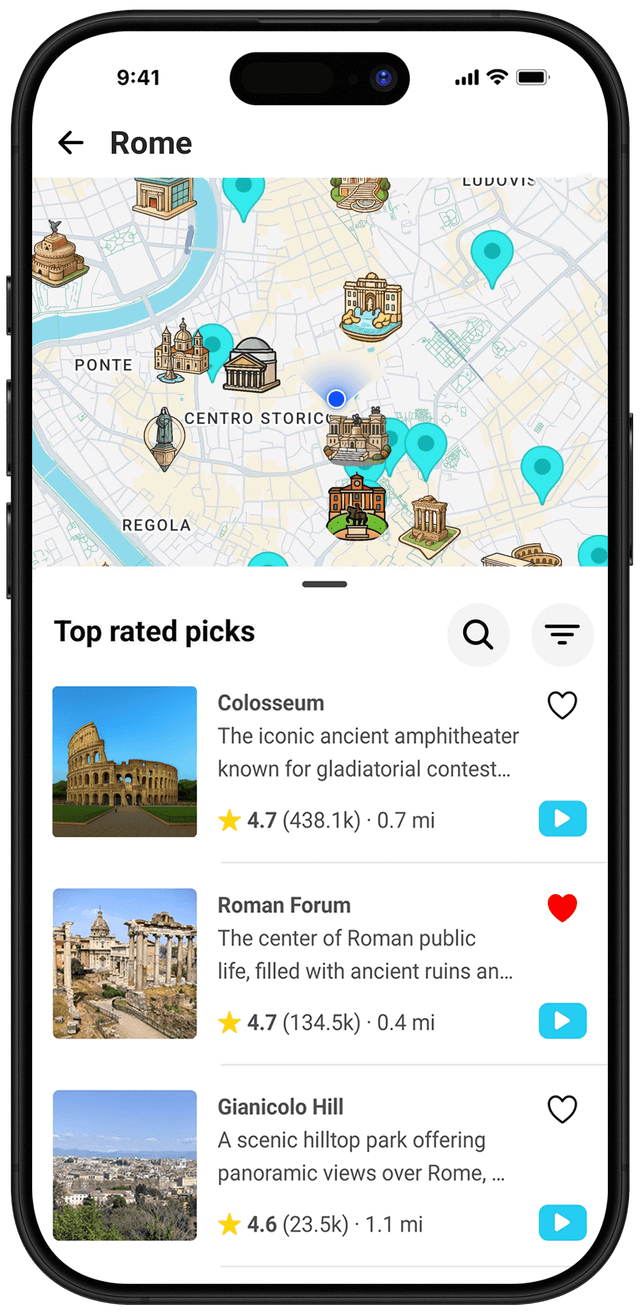
Make the most of your trip with the Travi App
Audio Guides
Professional narrated stories that you can listen to on your own schedule.
Snap & Learn
Point your camera at any monument to instantly identify it and hear its history.
Itineraries
Browse curated day-by-day plans, customize them to fit your style, or build your own from scratch and share with friends.